Hybrid Big Cats
A Comprehensive Scientific Review of Interspecific Hybrids in Panthera and Related Felids
Abstract
Hybridization among large felids has produced a range of rare and biologically significant hybrids, including lion–tiger crosses (ligers, tigons, and derivatives), lion–leopard hybrids (leopons), jaguar–lion hybrids (jaglions), and puma–leopard hybrids (pumapards). Although none occur naturally in the wild, these hybrids provide insight into reproductive compatibility, genomic imprinting, developmental biology, and the consequences of human‑directed breeding. This paper synthesizes current knowledge on their genetics, morphology, physiology, behavior, fertility, and welfare considerations.
1. Introduction
Hybrid big cats arise almost exclusively in captivity, where species with compatible chromosome structures are housed together. These hybrids offer a unique window into evolutionary divergence, chromosomal stability, and the biological limits of interspecific reproduction.
2. Genetic Foundations of Felid Hybridization
🧪 2.1 Chromosomal Compatibility
Most Panthera species share a chromosome number of 2n = 38, enabling cross‑species fertilization despite millions of years of evolutionary separation.
🧬 2.2 Genomic Imprinting and Growth Regulation
Parent‑of‑origin gene expression explains dramatic size differences:
- Ligers grow exceptionally large due to strong paternal growth‑promoting genes and weak maternal growth‑limiting genes.
- Tigons remain smaller because lion mothers contribute strong growth‑limiting genes while tiger fathers lack strong growth‑promoting ones.
This makes lion–tiger hybrids a classic model for imprinting studies.
3. Major Hybrid Types
3.1 Lion–Tiger Hybrids
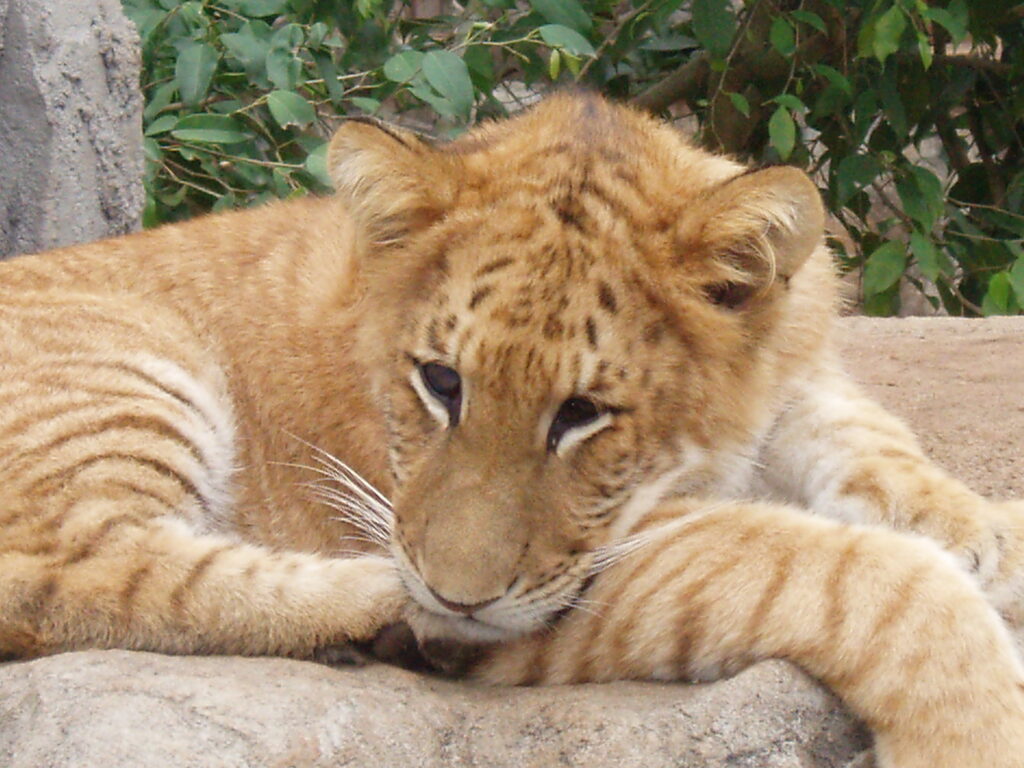
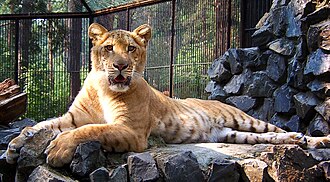
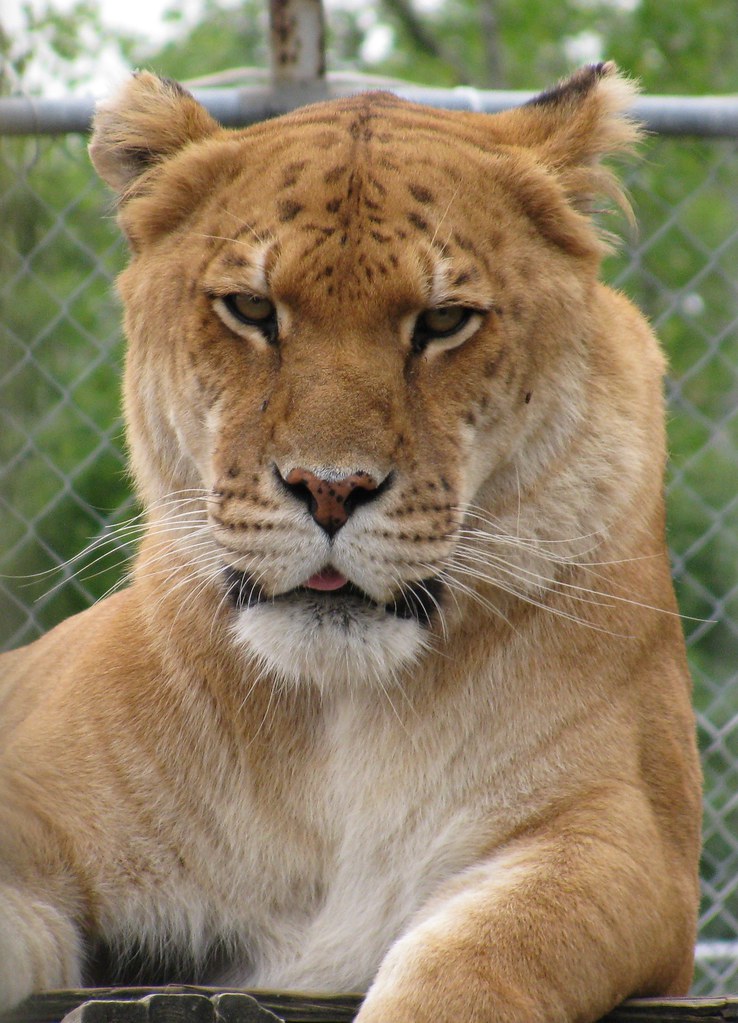
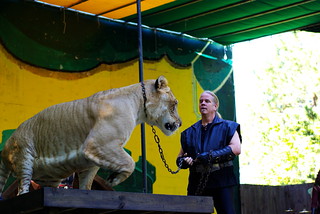
🦁➡️🐯 Liger (male lion × female tiger)
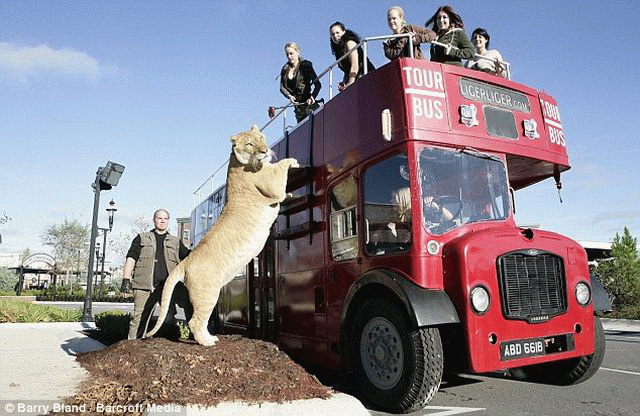
- Largest felid on Earth
- Tawny coat with faint stripes
- Social tendencies + strong swimming behavior
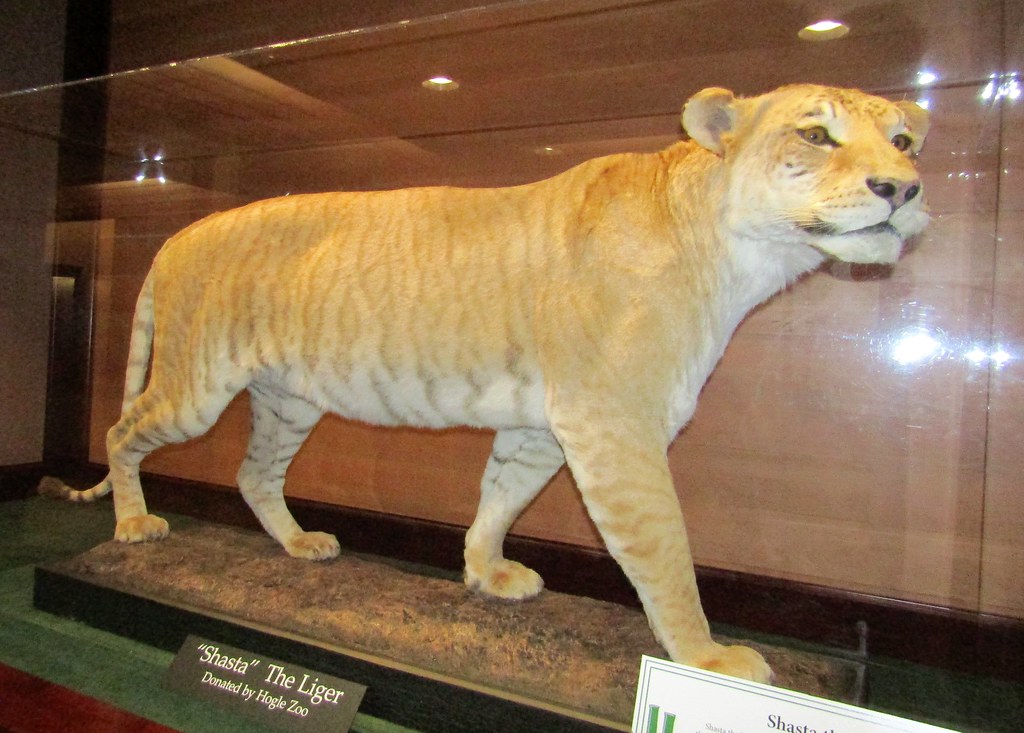
🐯➡️🦁 Tigon (male tiger × female lion)
- Smaller and more compact
- Stripes + faint lion cub spots
- More solitary behavior
Second‑Generation Hybrids
Female hybrids can sometimes reproduce, producing:
- Liliger
- Tiliger
- Li‑tigon
- Ti‑tigon
These are extremely rare and often display mixed traits from all contributing species.
3.2 Lion–Leopard Hybrids
🐆➡️🦁 Leopon (male leopard × female lion)
- Leopard rosettes on a lion‑like body
- Strong climbing ability
🦁➡️🐆 Lipard (male lion × female leopard)
- Less common due to size mismatch
- More leopard‑like in build
3.3 Jaguar–Lion Hybrids
🐆➡️🦁 Jaglion (male jaguar × female lion)
- Dark jaguar rosettes on a tawny lion‑like body
- Extremely powerful build
3.4 Puma–Leopard Hybrids
🐈➡️🐆 Pumapard (puma × leopard)
- Dwarfism common
- Long body, short legs
- Rosettes or spots depending on parentage
3.5 Other Reported Hybrids
Rare or unverified but genetically possible:
- Jagupard (jaguar × leopard)
- Tigard (tiger × leopard)
- Tiguar (tiger × jaguar)
4. Morphology and Physiology
📏 4.1 Size Variation
- Ligers: largest
- Tigons: smallest lion–tiger hybrid
- Leopons/jaglions: intermediate
- Pumapards: unusually small
🎨 4.2 Coat Patterns
Hybrids often display blended markings:
- Stripes + spots
- Rosettes + manes
- Dark jaguar rosettes on lion‑like frames
🧠 4.3 Behavioral Traits
Inherited behaviors include:
- Swimming (tigers, jaguars)
- Sociality (lions)
- Climbing (leopards)
5. Fertility and Reproductive Biology
🚹 5.1 Male Sterility
Male hybrids are almost always sterile due to disrupted spermatogenesis.
🚺 5.2 Female Fertility
Females may retain partial fertility, enabling rare second‑generation hybrids.
⚠️ 5.3 Developmental Challenges
Common issues include:
- Organ size mismatches
- Skeletal abnormalities
- Higher infant mortality
6. Welfare and Ethical Considerations
🌍 6.1 Conservation Value
Hybrid big cats have no conservation role and do not support endangered species recovery.
⚖️ 6.2 Ethical Concerns
Issues include:
- Health complications
- Breeding for entertainment
- Lack of natural ecological niche
- Welfare challenges in captivity
🧠 7. Discussion
Hybrid big cats illuminate the boundaries of felid genetics and imprinting. Their contrasting traits highlight both the flexibility and the limitations of interspecific reproduction. However, welfare concerns and lack of conservation value raise important ethical questions.
🐅 8. Conclusion
Hybrid big cats represent a fascinating intersection of genetics, evolution, and human influence. While scientifically valuable, their creation must be balanced against ethical and welfare considerations, with conservation efforts focused on preserving natural species
Liger Photos
Liger Data
Ligers are so big they make lions look like they skipped leg day and tigers look like they forgot to grow entirely.
Tigon Facts
Tigons are the introverts of the hybrid world — half lion, half tiger, 100% “please don’t make me socialize.”
Ligers and Tigons
Both hybrids prove one thing: even big cats have complicated family trees and questionable life choices.