Liger Sites Ranked

🥇 Tier 1 : Most Reliable Liger Focused Sites

  1. Liger.org — Best Overall (Science + Ethics + Clarity)
    Why it ranks #1

Most scientifically grounded of the liger‑specific sites

Strong welfare and ethics framing

Avoids sensationalism

Explains genetics, growth disorders, and hybridization accurately

Not peer‑reviewed, but far more responsible than typical “big cat” sites

Best for:
Research, ethical context, accurate general science.

🥈 Tier 2 : High‑Quality Educational and Science‑Aligned Sites

  1. Wikipedia (Liger / Tigon / Hybrid Big Cat Pages)
    Why it’s #2

Well‑cited

Neutral tone

Links to primary literature

Updated regularly

Best for:
Quick fact‑checking and citation tracing.

  1. National Geographic (Hybridization Articles)
    Why it’s here

Science‑based

Expert interviews

No hype or exaggeration

Best for:
Accessible explanations with strong editorial standards.

🥉 Tier 3 : Mixed Quality but Useful

  1. Big Cat Rescue (Hybrid Cat Information Pages)
    Why it’s mid‑tier

Strong ethical stance

Accurate welfare information

Not liger‑specific, but relevant

Best for:
Ethics and welfare context.

  1. Animal Diversity Web (University of Michigan)
    Why it’s here

Academic tone

Good species background

Not hybrid‑focused, but helpful for lion/tiger biology

Best for:
Background species biology.

🟥 Tier 4 : Low Scientific Value and High Sensationalism

  1. LigerWorld.com
    Why it ranks low

Sensational tone (“world’s biggest cat!”)

Exaggerated claims

Weak scientific grounding

Promotes spectacle over welfare

Best for:
Understanding how misinformation spreads — not for research.

  1. Random viral blogs / clickbait sites
    Examples:

“10 Amazing Facts About Ligers!”

“Meet the Giant Super‑Cat!”

Why they’re bottom tier

Inaccurate

No citations

Promote myths

Ignore welfare issues

Best for:
Nothing research‑related.

🚫 Tier 5 : Avoid Entirely

  1. Pro‑Breeding / Exotic Pet / Roadside Zoo Sites
    Why they’re last

Scientifically false claims

Promote unethical breeding

Hide or deny health problems

Commercial bias

Best for:
Avoiding.

🧭 Final Ranked List (Most to Least Reliable)


Liger.org

Wikipedia (Hybrid Big Cat pages)

National Geographic

Big Cat Rescue (hybrid info)

Animal Diversity Web

LigerWorld.com

Viral blogs / clickbait wildlife sites

Pro‑breeding / exotic pet sites

Review of Liger.org

I’ll walk through major claims commonly made on Liger.org and compare each one to what the scientific and institutional literature actually says, with a quick verdict each time.

  1. “Hybrid big cats (ligers, tigons, etc.) occur almost exclusively in captivity and not in the wild.”
    What Liger.org claims:
    Hybrid big cats are human‑created; they don’t naturally occur in the wild.

What the literature says:

Hybrid big cats (lion × tiger, lion × leopard, etc.) are documented from captive settings, not wild ecosystems.

Modern discussions of hybrid big cats in scientific and educational contexts treat them as products of captivity and human management, not natural populations.

Verdict:
Accurate. The consensus is that ligers, tigons, and similar hybrids are essentially captive artifacts, not wild phenomena.

  1. “Ligers are the largest of the big cats due to genomic imprinting and growth‑regulation mismatches.”
    What Liger.org claims:

Ligers grow larger than both lions and tigers.

This is linked to genomic imprinting and mismatched parental growth‑regulation signals.

What the literature says:

Educational genetics sources explicitly note that ligers are the largest big cats, larger than either parent species.

The explanation given in genetics outreach and hybridization discussions is that imprinted growth‑regulating genes from lion and tiger parents interact abnormally, leading to overgrowth in ligers and undergrowth in tigons.

Verdict:
Well‑aligned with current explanations. The exact molecular details are still being studied, but the imprinting‑based growth dysregulation model is widely used and consistent with current understanding.

  1. “Hybrid big cats often suffer from health problems: joint issues, organ strain, reduced fertility, and other welfare concerns.”
    What Liger.org claims:

Hybrids, especially ligers, are prone to:

Joint and skeletal problems

Organ stress from oversized bodies

Reduced fertility

General welfare issues in captivity

What the literature says:

Position papers from sanctuary alliances describe hybrid big cats (and selectively bred color morphs) as suffering debilitating health problems, including musculoskeletal issues and other chronic conditions.

Zoo and wildlife medicine literature and sanctuary reports consistently flag health and welfare risks associated with hybridization and inbreeding in big cats.

Verdict:
Accurate in substance. The specific prevalence numbers may not always be quantified on Liger.org, but the direction and nature of the health concerns match what sanctuaries and veterinary sources report.

  1. “Hybrid big cats have no conservation value and are not part of legitimate conservation breeding programs.”
    What Liger.org claims:

Hybrids do not contribute to species conservation.

Ethical, conservation‑focused institutions avoid breeding them.

What the literature says:

Conservation and sanctuary position papers explicitly state that hybrid big cats have no conservation value and that breeding them undermines species‑level conservation goals.

Conservation biology and zoo management frameworks prioritize maintaining species integrity, not producing hybrids.

Verdict:
Fully consistent with mainstream conservation ethics. Hybrids are considered welfare liabilities, not conservation assets.

  1. “Hybridization in big cats can still be scientifically informative (reproductive compatibility, development, imprinting, etc.).”
    What Liger.org claims:

Even though hybrids are ethically problematic, they provide insight into:

Reproductive compatibility

Genomic imprinting

Developmental biology

Hybrid fertility and morphology

What the literature says:

Hybridization is widely used in biology as a tool to study reproductive barriers, gene regulation, and development, and big‑cat hybrids are often cited as illustrative examples in discussions of hybridization and imprinting.

Educational and scientific reviews on hybrid big cats explicitly frame them as biologically informative but ethically fraught.

Verdict:
Accurate and nuanced. The dual framing—scientifically interesting, ethically problematic—matches how serious literature and policy documents talk about them.

  1. “Hybrid big cats are primarily bred for entertainment, exhibition, and commercial purposes (roadside zoos, private collections, etc.).”
    What Liger.org claims:

The main drivers of hybrid breeding are:

Entertainment shows

Roadside zoos

Private ownership

Photo ops and spectacle

What the literature says:

Sanctuary and advocacy position papers describe hybrid big cats as profitable products for the exotic animal trade, especially in entertainment and private ownership contexts.

Ethical analyses of hybrid big cats repeatedly link them to commercial exploitation, not conservation or legitimate research.

Verdict:
Well‑supported. The described motives for breeding hybrids line up with what sanctuary coalitions and welfare organizations report.

  1. “Hybrid big cats illustrate broader patterns of hybridization seen across animals and plants.”
    What Liger.org claims:

Big‑cat hybrids are one example within a much larger pattern of hybridization in nature.

What the literature says:

Reviews of hybridization note that a significant fraction of animal and plant species show some degree of hybridization, and big‑cat hybrids are often used as a familiar example in that broader context.

Verdict:
Accurate framing. Liger.org is correct to place big‑cat hybrids within the wider biological phenomenon of hybridization, while still emphasizing their artificial origin.

Overall judgment on Liger.org vs scientific literature
Where it’s strong:

Captivity‑only occurrence

Overgrowth and imprinting explanation

Health and welfare problems

Zero conservation value

Commercial/entertainment motives

Ethical stance against breeding

Where you should be cautious:

It’s still a secondary, non‑peer‑reviewed source.

Some mechanisms (like imprinting details) are simplified for readability.

It doesn’t always provide direct citations to primary studies.

Net take:
For the major claims that matter—biology, welfare, and ethics—Liger.org is well aligned with scientific and institutional literature. It’s a solid interpretive layer, as long as you treat it as a gateway and not a substitute for primary research.

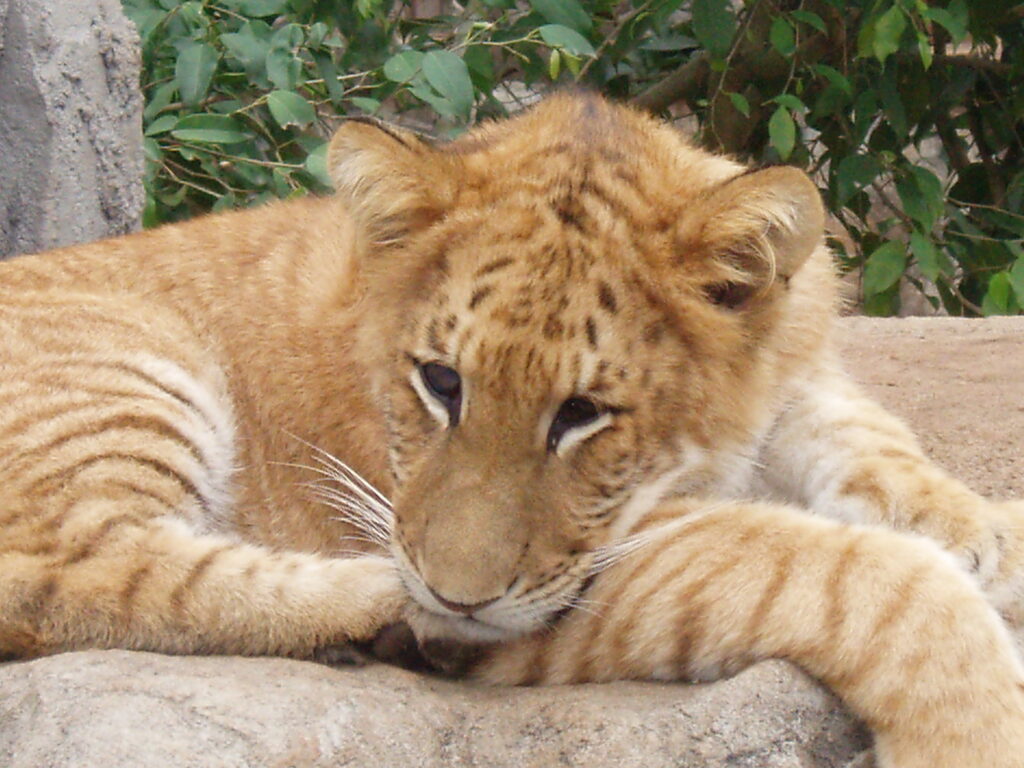
Hybrid Labs and Programs

🧬 Project Chimera Division (PCD)

Project Chimera Division is a covert government program specializing in stable, combat‑optimized human–animal hybrids. Their work focuses on discipline, endurance, and battlefield control. Chimera hybrids are known for reliability, tactical clarity, and balanced power. Notable Creations: Atlas, Vale, Hawke, Magnus, Orion

⚠️ DARX‑9 Bio‑Warfare Initiative

DARX‑9 is a black‑site military program responsible for some of the most volatile and aggressive multi‑species splices ever engineered. Their prototypes are powerful, unpredictable, and often unstable. Notable Creations: Brontes, Riven, Kael (original version)

🛰️ Helix Quietworks Program

Helix Quietworks is a government intelligence branch focused on stealth‑oriented hybrids. Their creations excel in sensory precision, infiltration, and low‑motion combat. Notable Creations: Kestrel, Juno

🏢 Genodyne Industries — Hybrid Solutions Division

Genodyne is a polished corporate biotech giant that publicly claims ethical research while secretly engineering high‑performance hybrid athletes. Their designs emphasize speed, charisma, and marketability. Notable Creations: Zara, Saffron

🔬 Apexion Labs — Adaptive Evolution Unit

Apexion Labs is a private research group obsessed with pushing hybrid limits. They specialize in multi‑species splicing, reflex amplification, and experimental neural acceleration. Notable Creations: Echo, Rios

🌙 Arinth Night‑Market Gene‑Crafters

This underground collective operates in the shadows of the Night Markets, crafting hybrids with sensory enhancements and stealth‑based traits. Their work is unpredictable but highly effective. Notable Creations: Kestrel (co‑engineered)

🌀 Silver Circle Genetic Atelier

A hidden, philosophy‑driven research collective that blends martial arts principles with genetic engineering. Their hybrids are designed for precision, flow, and technical mastery. Notable Creations: Renée

🔥 Flamebound Twins’ Bio‑Forge

A rogue mobile laboratory run by two eccentric geneticists. Their creations are volatile, emotionally driven, and often unstable — but incredibly powerful. Notable Creations: Kael (modified version)

Meet The Fighters

🦁 Atlas — “The Mountain That Moves”

Atlas is a human–liger hybrid engineered by Project Chimera Division as part of their Stability Line. Massive, calm, and impossibly steady, he was designed to endure battlefield trauma without losing focus. His liger DNA grants overwhelming strength, while his human conditioning gives him monk‑like discipline. Atlas fights with slow, deliberate power, using the Solar Anchor, Pillar Guard, and Lion’s Step to control the arena like a living fortress.

🐯 Brontes — “The Thunderclaw”

Brontes is a human–tiger–snow leopard splice created by the DARX‑9 Bio‑Warfare Initiative. Built for explosive aggression, he was part of the Shock Trooper Series, engineered for rapid assault and unpredictable ferocity. Thick rosetted fur, massive forearms, and ice‑blue eyes mark him as one of DARX‑9’s most volatile prototypes. His signature techniques include the Thunder Pounce, Avalanche Drop, and Storm Rush.

👑 Vale — “The Crimson Monarch”

Vale is a human–lion hybrid developed by Project Chimera Division’s Command Line. Designed for leadership and tactical clarity, Vale carries himself with regal precision and calm authority. His deep red fur and controlled posture reflect his engineered purpose. Vale’s signature techniques include the Crownbreaker, Monarch’s Grip, and Silent Verdict.

🏜️ Rios — “The Desert Phantom”

Rios is a human–caracal–gazelle splice created by Apexion Labs under the Adaptive Mobility Project. Built for fluid movement and deceptive speed, he moves with desert‑animal smoothness and breath‑efficient agility. Sandy fur, long limbs, and reflective eyes give him a mirage‑like presence. Rios specializes in the Desert Mirage, Sandstep Sweep, and Oasis Counter.

✨ Renée — “The Silver Pulse”

Renée is a human–ocelot hybrid engineered by the Silver Circle Genetic Atelier as part of their Flowform Line. Compact, flexible, and deceptively strong, she excels in grappling and fluid transitions. Her silver‑gray fur and relaxed posture hide a razor‑sharp submission game. Renée’s signature techniques include the Silver Pulse Lock, Moonstep Sweep, and Starlight Choke.

🌑 Kestrel — “The Midnight Mirage”

Kestrel is a human–black panther–owl splice co‑engineered by Helix Quietworks and the Arinth Night‑Market Gene‑Crafters. Created for infiltration and sensory stealth, she moves with near‑silent precision and reads intent with uncanny accuracy. Dark fur and reflective eyes make her vanish in low light. Her signature techniques include the Shadow Slip, Nightfall Drop, and Ghost Palm.

🦉 Hawke — “The Night Sentinel”

Hawke is a human–great horned owl hybrid created by Project Chimera Division’s Guardian Line. Built for protection and spatial awareness, he fights with a defender’s instinct and a ranger’s patience. Broad shoulders, feathered arms, and a steady gaze define his presence. Hawke’s signature techniques include the Skyhook Throw, Sentinel Guard, and Hawkeye Lock.

💨 Zara — “The Gale Runner”

Zara is a human–cheetah hybrid engineered by Genodyne Industries under the Velocity Initiative. Designed as a marketable “super‑athlete,” she moves with joyful, unstoppable speed. Sleek fur, long legs, and constant motion define her style. Zara’s signature techniques include the Gale Burst, Windstep Dash, and Feather Kick.

❄️ Magnus — “The Frost Titan”

Magnus is a human–polar bear hybrid created by Project Chimera Division’s Endurance Line. Towering and glacier‑pale, he was engineered for cold‑resistance, pain tolerance, and crushing power. His presence feels like a winter storm given shape. Magnus specializes in the Frost Hammer, Glacier Hold, and Icewall Brace.

🌟 Orion — “The Starbound Striker”

Orion is a human–snow leopard hybrid developed by Project Chimera Division’s Tactician Line. Built for analytical combat and perfect timing, he fights with scientific precision and flawless posture. His silver‑white fur and disciplined stance reflect his engineered purpose. Orion’s signature techniques include the Starline Strike, Constellation Sweep, and Astral Guard.

🎵 Echo — “The Rhythm Breaker”

Echo is a human–fox–serval–hummingbird splice created by Apexion Labs’ Reflex Amplification Program. Designed to test multi‑species neural acceleration, he fights to an internal rhythm that shapes every movement. Wiry limbs and patterned fur give him a kinetic, musical presence. Echo’s signature techniques include the Resonance Kick, Echo Step, and Harmonic Counter.

❄️ Juno — “The Winter Whisper”

Juno is a human–arctic fox hybrid engineered by Helix Quietworks under the Stillness Protocol. Built for low‑motion combat and sensory precision, she wastes no energy and strikes only when necessary. Soft white fur and pale eyes give her a quiet, ghostlike presence. Juno’s signature techniques include the Frostbite Jab, Snowline Sweep, and Winter Guard.

🌞 Saffron — “The Radiant Ember”

Saffron is a human–golden jackal hybrid created by Genodyne Industries’ Emberline Project. Designed to test adrenaline‑linked performance boosts, she fights with fiery momentum and emotional intensity. Warm fur and bright eyes reflect her energetic nature. Saffron’s signature techniques include the Sunstripe Slash, Heatwave Spin, and Radiant Step.

🩸 Riven — “The Bloodhound”

Riven is a human–bloodhound–wolverine splice engineered by the DARX‑9 Bio‑Warfare Initiative’s Berserker Series. Built for raw ferocity and pain‑suppression, he thrives in close‑range chaos. Scar‑marked fur and intense eyes reveal a life shaped by violence. Riven’s signature techniques include the Fangbreaker, Bloodline Rush, and Shatter Grip.

🔥 Kael — “The Ember Wolf”

Kael is a human–wolf–fire salamander splice originally created by DARX‑9, then stolen and modified by the Flamebound Twins’ Bio‑Forge. His body runs hot, his movements crackle with intensity, and his hybrid physiology borders on unstable. Fiery fur and restless energy define him. Kael’s signature techniques include the Ember Kick, Flare Burst, and Kindle Step.

Funny Tigon Jokes

🐯🦁 25 Tigon Jokes

  1. Why don’t tigons brag? They’re already confused enough about who gets the credit.
  2. What do you call a shy tigon? A striped introvert.
  3. Why did the tigon skip the family reunion? Too many questions about “which side” it takes after.
  4. What’s a tigon’s favorite sport? Anything that doesn’t involve being compared to a liger.
  5. Why did the tigon bring a map? It keeps forgetting which half is which.
  6. What do tigons eat for lunch? Whatever fits in their identity crisis.
  7. Why don’t tigons play poker? They can’t keep a straight face — too many stripes.
  8. What’s a tigon’s favorite hobby? Avoiding conversations about its parents.
  9. Why did the tigon sit in the shade? It didn’t want its stripes to fade.
  10. What do you call a tigon who loves to swim? A tiger with commitment issues.
  11. Why did the tigon join a book club? It wanted to read up on who it’s supposed to be.
  12. What’s a tigon’s least favorite question? “So… are you more lion or more tiger?”
  13. Why don’t tigons use treadmills? They prefer pacing dramatically.
  14. What’s a tigon’s favorite movie genre? Mixed feelings.
  15. Why did the tigon start a journal? To keep track of its personality changes.
  16. What do tigons and Wi‑Fi have in common? They both disappear when you need them most.
  17. Why did the tigon refuse to roar? It didn’t want to sound like it was choosing sides.
  18. What’s a tigon’s favorite holiday? Whichever one has the most snacks.
  19. Why did the tigon get kicked out of yoga class? Its “cat pose” was too confusing for everyone else.
  20. What do you call a tigon who loves naps? A lion at heart.
  21. Why did the tigon bring sunglasses? To protect its identity from bright ideas.
  22. What’s a tigon’s favorite board game? Guess Who.
  23. Why don’t tigons like selfies? They can never decide which angle looks more “them.”
  24. What do tigons say when they’re stressed? “I need a moment to stripe things out.”
  25. Why did the tigon start a podcast? To finally explain itself — in 47 confusing episodes.

Tigons: A Scientific Overview of the Lion–Tiger Hybrid Born in Reverse

🧬 Tigons: A Scientific Overview of the Lion–Tiger Hybrid Born in Reverse

🐾 Introduction

Tigons (Panthera tigris × Panthera leo) are the hybrid offspring of a male tiger and a female lion — the opposite parent pairing that produces ligers. Although they share the same two parent species, tigons differ dramatically in size, appearance, and biology. Like ligers, they exist only in captivity, where the two species are kept together.

🔬 Genetics and Hybrid Biology

Hybrid Origin

  • Father: Tiger (Panthera tigris)
  • Mother: Lion (Panthera leo)
  • Both species have compatible chromosome structures, allowing hybridization despite millions of years of evolutionary divergence.

Size and Growth

Tigons are typically smaller than both parent species. This is the opposite of ligers and is largely due to genomic imprinting:

  • Female lions normally promote growth in their offspring.
  • Male tigers lack the strong growth-promoting genes that male lions have.
  • As a result, tigons do not experience hybrid gigantism.

Most tigons weigh 150–180 kg (330–400 lbs), though some individuals exceed this.

Physical Traits

Tigons often show a mosaic of lion and tiger features:

  • Coat: Pale orange or tawny with faint stripes and sometimes spots (from lion cub patterning).
  • Mane: Males may have a small, scruffy mane.
  • Tail tuft: Usually present, inherited from lions.
  • Facial structure: More tiger-like, with a rounder head.

Behavioral Traits

  • Social tendencies: More solitary than ligers, reflecting tiger paternal influence.
  • Swimming: Many enjoy water, like tigers.
  • Vocalizations: Can roar, chuff, and make hybrid vocal patterns.

Fertility

  • Male tigons: Almost always sterile.
  • Female tigons: Occasionally fertile and capable of producing “ti-tigons” or “li-tigons.”

This again follows Haldane’s Rule, where the male hybrid is more likely to be sterile.

🏥 Health and Welfare Considerations

Tigons often face:

  • Shorter lifespans
  • Dental crowding
  • Organ size mismatches
  • Skeletal issues
  • Higher infant mortality

These issues stem from mismatched growth genes and hybrid developmental conflicts.

Because tigons have no conservation value and often suffer health complications, many zoological organizations discourage intentional breeding.

🌟 Famous Tigons

While tigons are less common than ligers, several individuals have become well known:

1. Ranjini

  • Location: Alipore Zoo, Kolkata, India
  • Born: 1970s
  • Significance: One of the longest-lived tigons, reaching over 20 years of age.
  • Notable Trait: Distinctive striping and a robust build.

2. Rudhrani

  • Location: Alipore Zoo (mother of Ranjini)
  • Historical Importance: One of the earliest documented tigons in India.
  • Legacy: Produced multiple hybrid offspring, including rare second-generation hybrids.

3. Maude

  • Location: Manchester Zoo, UK (early 20th century)
  • Significance: One of the first tigons exhibited in Britain.
  • Public Impact: Helped spark early Western fascination with big-cat hybrids.

4. Noelle

  • Location: Shambala Preserve, California
  • Known For: Advocacy role — her story is used to educate the public about the ethics of hybrid breeding.
  • Appearance: Pale coat with subtle striping.

🌍 Ecological and Conservation Context

Tigons, like ligers:

  • Do not occur in the wild
  • Do not contribute to conservation of lions or tigers
  • Are not part of any legitimate breeding program
  • Exist solely due to human-controlled captive environments

However, they do serve as:

  • Case studies in hybrid genetics
  • Educational examples in discussions about animal welfare
  • Illustrations of genomic imprinting and hybrid viability

🧭 Conclusion

Tigons are a remarkable example of how genetics, evolution, and human intervention intersect. Their smaller size, unique appearance, and complex health challenges distinguish them sharply from ligers, even though both hybrids share the same parent species. Studying tigons deepens our understanding of hybrid biology — and raises important ethical questions about the purpose and consequences of creating such animals.